




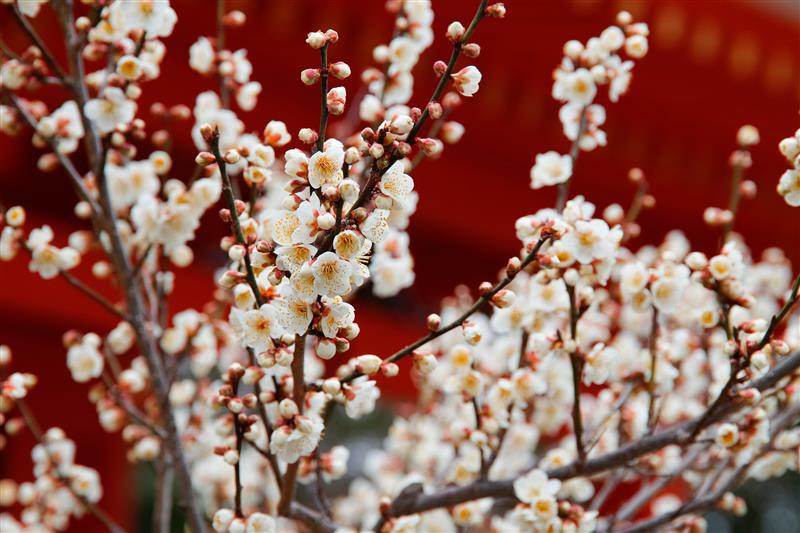
KIMINARADE DARENIKAMISEMU UMENOHANA
IROWOMO KAWOMO SHIRUHITOZO SHIRU
The author of this waka poem is the Heian-period poet Kino Tomonori.
It is said that the poem was written when he broke off a branch of plum blossoms to give to someone, adding the words, “Who else but you should I show these plum blossoms to? Only those who understand their beautiful color and fragrance can truly appreciate them.” Isn’t that incredibly romantic?
By the way, Ume-chan has a plum blossom on your head, but do you actually like plum blossoms?
Of course! I love everything about plums—the flowers, the trees, and especially the fruit! The fruit becomes my beloved umeboshi and umeshu♪
Most people go flower viewing to admire cherry blossoms, but I’m absolutely on Team Plum! Above all, the fragrance of plum blossoms is irresistible♡
Kyushu has many famous plum blossom spots, so I hope everyone gets the chance to enjoy them♪
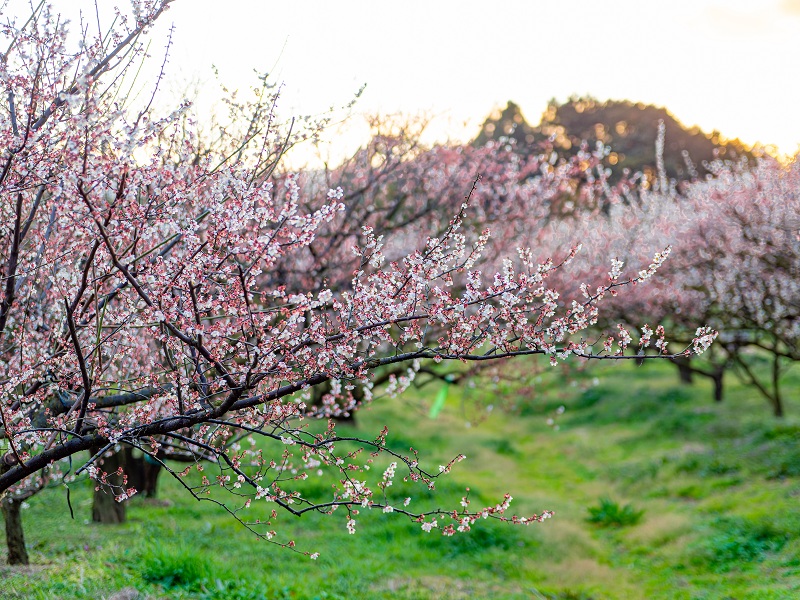
Across Kyushu, plum blossoms usually begin blooming in late January and reach their peak from early February to mid-March.
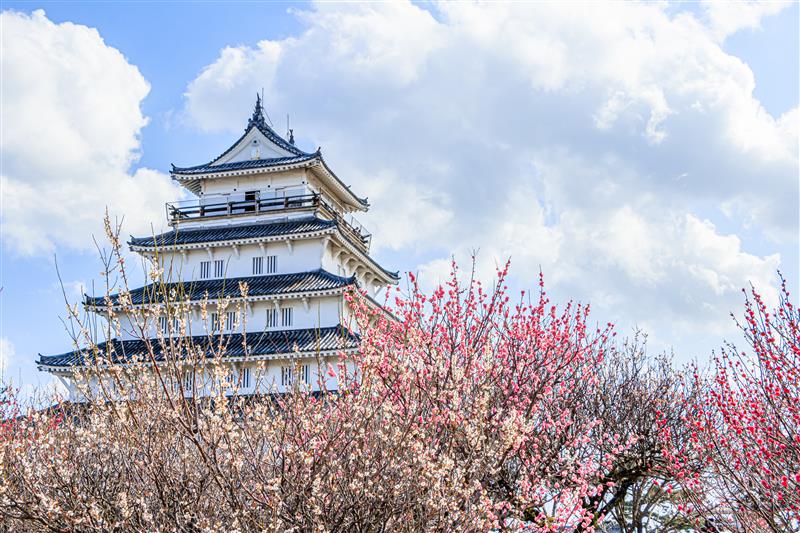
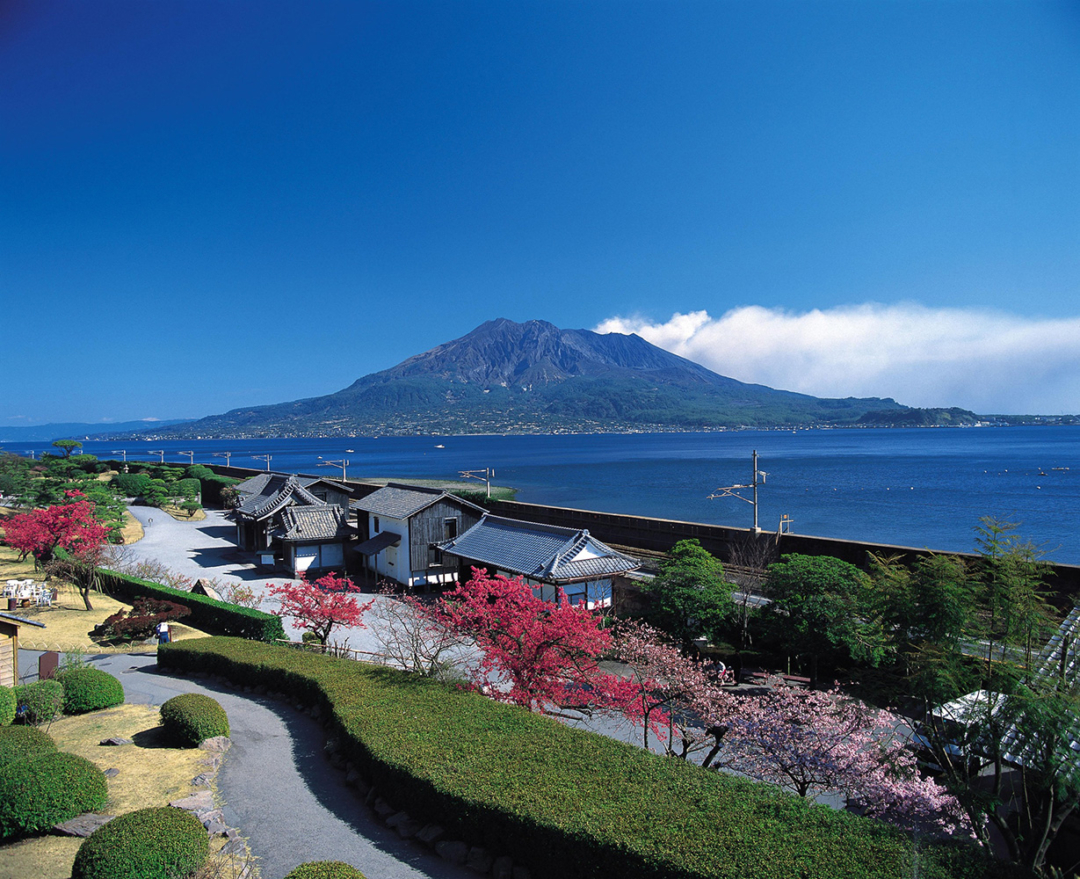
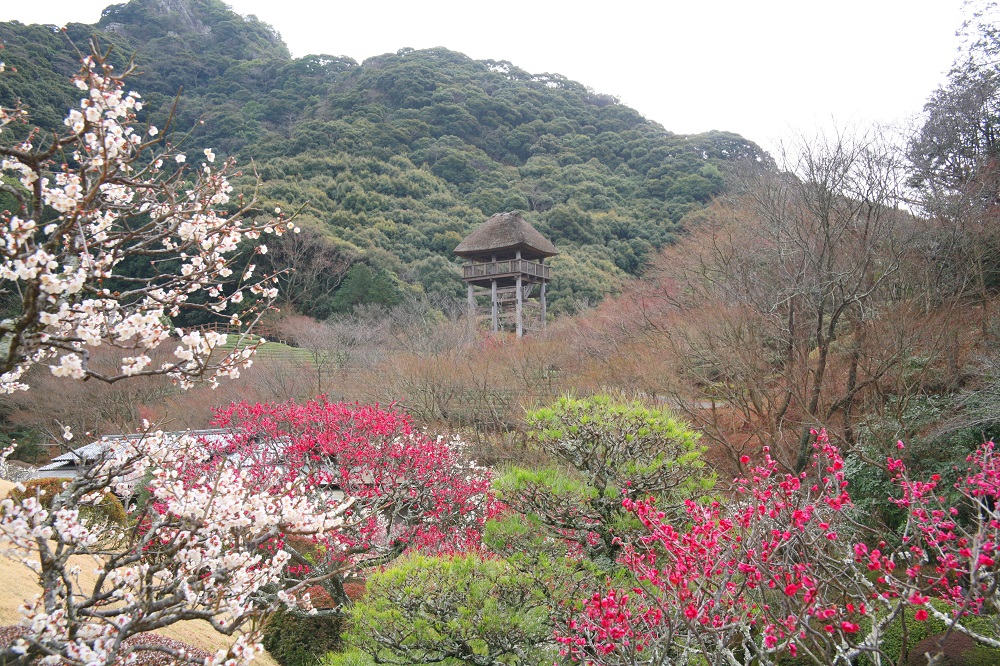
Near the “Yoko Museum & Keishu-en Japanese Garden,” which features dynamic medieval-style stonework, waterfalls, and tea fields arranged in a striking harmony, the nearby Mifunegaoka Plum Grove offers about 3,000 plum trees spread across 50,000 tsubo.
Blooming periods and varieties differ from place to place, so I recommend checking in advance before you go out. While enjoying sightseeing in Kyushu, be sure to take in the red and white plum blossoms blooming under the clear early-spring sky♪