




We recently received a wonderful review from a customer who participated in our “Hakata Magemono” workshop taught by the 18th‑generation craftsman, Shibata Tamaki. We are delighted to share their feedback with you here♪
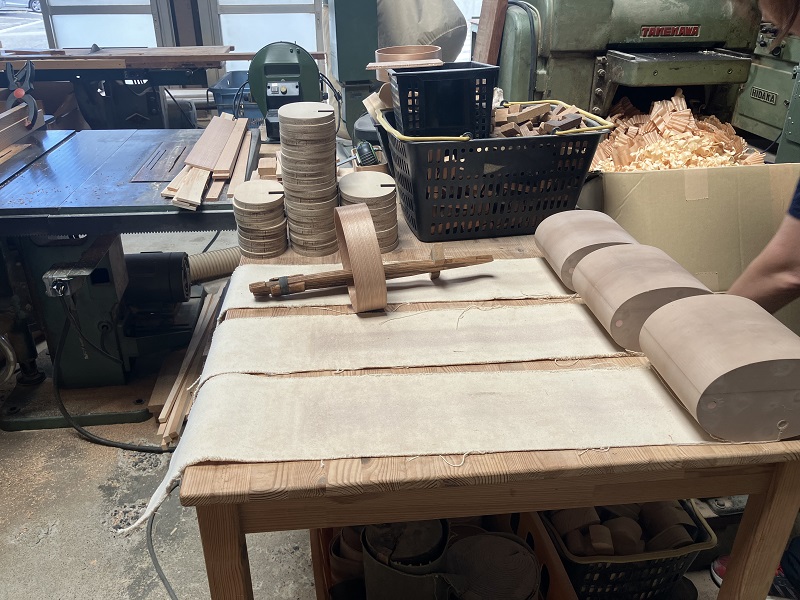
Last week, one of my oldest friends visited us in Fukuoka. He’s keenly interested in Japanese crafts, so my wife and I decided to sign us up for the bentwood box workshop at Hakata Magemono Tamaki.
Of the three of us, I was the only one with a background in woodworking, and none of us speaks Japanese at a conversational level, so we were a bit intimidated, but the Hakata bentwood boxes are very beautiful, and we were intrigued by the prospect of learning about them from someone whose lineage in the craft stretches back 18 generations.
On the day of the workshop, we took the subway to Fukuoka Airport and then walked about twenty minutes to the studio. We were delighted to learn that a translator had been arranged for us. Mike Kato, an American who has been living in Japan for nearly forty years, had been involved in a documentary about the Tamaki bentwood box studio, which made him the perfect interpreter for the experience.
After a brief presentation by Mariko san about the history of Hakata bentwood boxes, and an orientation to the very specific materials that are used to make them, the hands-on part of the workshop began. We learned how to cut the bark of wild mountain cherry trees into thin strips and to process them into the beautiful contrasting weaving material that makes the characteristic dark squares on the sides of Hakata cedar boxes.
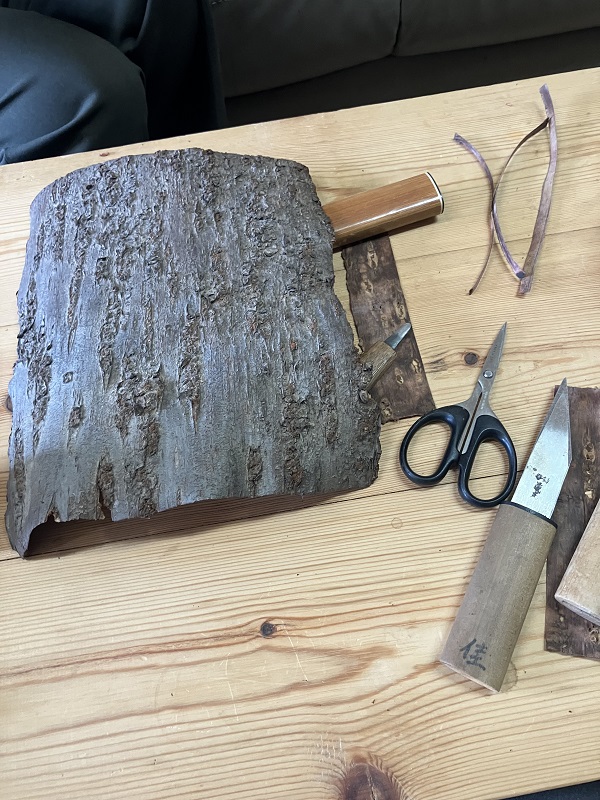
We prepared some of these cherry bark strips, cut slits into the sides of our own cedar boxes, and wove the strips into the boxes. It was challenging and fun. Our results were far from the perfect little squares that decorate the sides of the the Tamaki family’s bentwood boxes, but we were pleased with them.
The finished boxes were ours to take home.
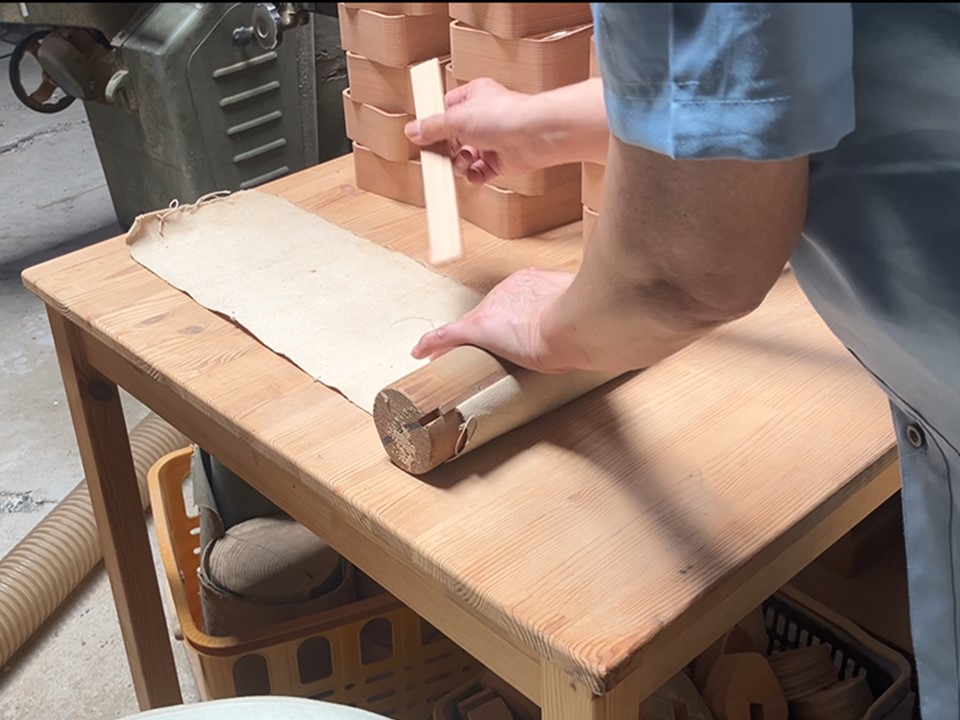
Next it was time to try our hand at bending slats of cedar wood into round shapes, which involves taking a softened slat from a piping hot water bath and then, before it cools, manhandling it into a loop and clamping the ends so that it keeps its new shape. This was a lot harder than Mariko san made it look! But again, it was challenging and fun, and we came away with a new appreciation for the patience and skill it takes to make a Hakata bentwood box.
In short, the experience was educational and fun, and we came away with beautiful souvenirs that we’d had a hand in making. Highly recommended!

Thank you so much, Mr.M, for sharing such a wonderful review!! Our entire staff was truly moved!
If you’re interested in experiencing “Hakata Magemono” with the 18th‑generation master, Shibata Tamaki,
please click here!